
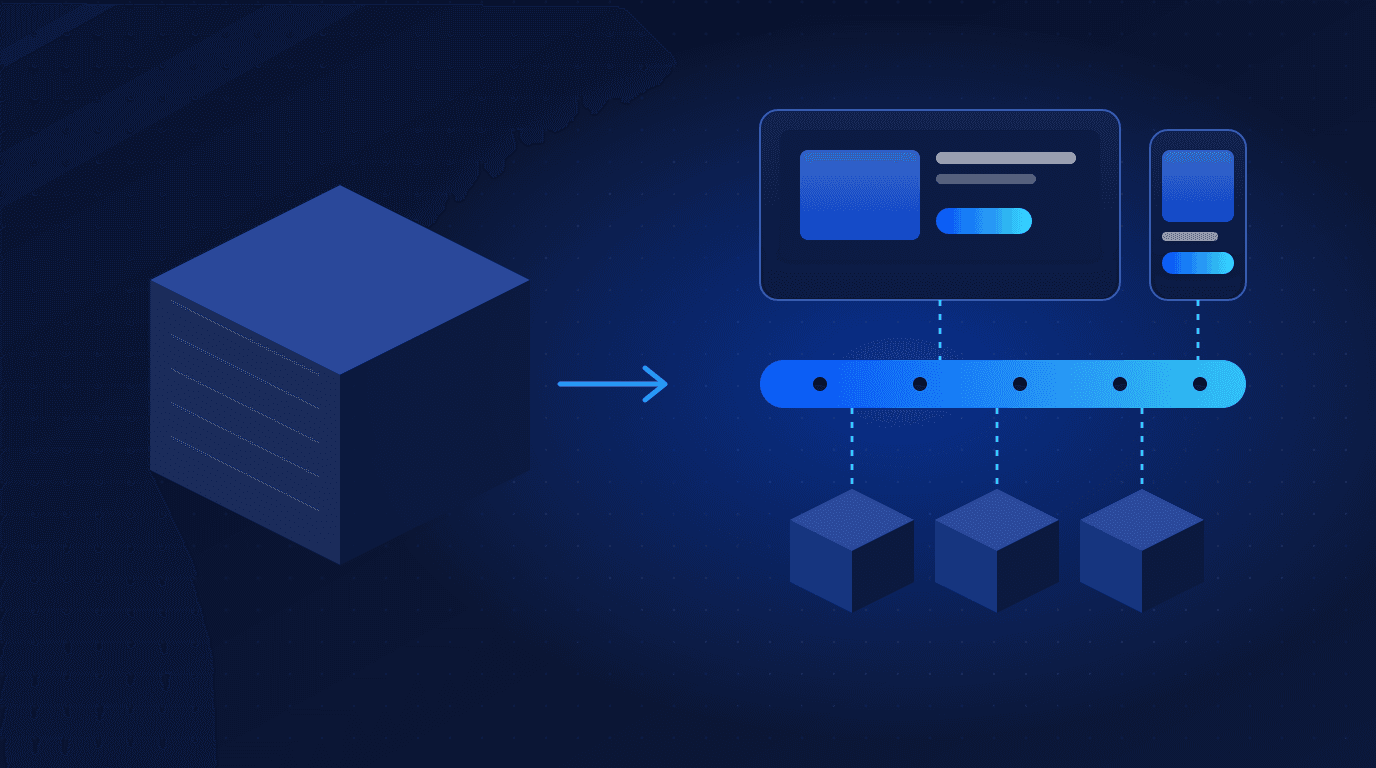
Traditional ecommerce platforms bundle the storefront and the commerce back end into one system, while headless commerce separates them and connects them through APIs. Traditional platforms are faster and cheaper to launch; headless gives you more freedom over design, performance and integrations, at a higher build and maintenance cost.
This comparison explains how each approach works, where each one wins, and how to choose the right architecture for your brand today and as you grow.
What is traditional (monolithic) ecommerce?
In a traditional setup, one platform handles everything: products, cart, checkout, customer accounts and the storefront pages customers see. You customise the storefront through themes, templates and apps. It is a proven, cost-effective model that powers most online stores.
What is headless commerce?
Headless commerce "removes the head", meaning the storefront, from the commerce engine. The back end still manages products, orders and checkout, but the storefront is a separate application, often built with a modern framework such as Next.js, that fetches data through APIs. The same back end can power a website, a mobile app, in-store screens and marketplaces at once.
Headless vs traditional ecommerce: side-by-side comparison
| Traditional | Headless | |
|---|---|---|
| Time to launch | Weeks | Months |
| Upfront cost | Lower | Higher |
| Design freedom | Within theme limits | Complete |
| Performance ceiling | Good, limited by theme and apps | Very high, if built well |
| Multi-channel (app, kiosk, marketplace) | Limited | Built for it |
| Team needed | Merchandisers, occasional developer | Ongoing development team |
| Maintenance | Mostly handled by the platform | Your responsibility for the storefront |
Benefits of headless commerce
- Performance – server rendering, edge caching and full control over scripts make very fast storefronts possible.
- Unlimited design – build exactly the experience your brand needs, without theme constraints.
- Omnichannel – one back end serves web, mobile apps, in-store and new channels.
- Flexible integrations – combine best-in-class search, CMS, personalisation and ERP systems.
- Future-proofing – replace one part of the stack without rebuilding everything.
Drawbacks of headless commerce
- Higher cost – you are building and maintaining a custom application, not configuring a theme.
- More complexity – more systems to integrate, host, monitor and secure.
- App compatibility – many plug-and-play apps are designed for traditional storefronts and need custom integration.
- Dependence on developers – marketers need a good CMS set-up to avoid waiting on developers for every change.
Is headless better for speed and SEO?
Not automatically. A headless storefront gives you the tools to be extremely fast, but a poorly built one can be slower than a well-optimised theme. The SEO benefits only appear when the storefront renders content on the server, keeps clean URLs, and handles metadata, structured data, sitemaps and redirects properly. A well-tuned traditional store with a lean app stack can also achieve excellent Core Web Vitals.
When should you choose traditional ecommerce?
- You are launching or growing and speed to market matters most.
- Your needs are covered by themes and apps.
- You do not have, or want, an ongoing development team.
- You want the lowest total cost of ownership.
When should you choose headless commerce?
- Your brand experience cannot be delivered within theme limits.
- You sell across many channels from one catalogue.
- Performance is a competitive advantage and you have hit the ceiling of your theme.
- You need complex integrations with ERP, PIM, CMS or custom systems.
- You have the budget and team to build and maintain a custom storefront.
The middle ground: hybrid and composable approaches
It does not have to be all or nothing. Many brands keep a traditional platform for checkout and back office while building headless landing pages, content hubs or a mobile app. Others adopt a composable approach step by step, replacing one component at a time. This spreads cost and risk while you prove the value.
How to move from traditional to headless
- Audit your current performance, conversion and integration pain points.
- Define the business case: what headless will improve, and how you will measure it.
- Choose your storefront framework, CMS and hosting.
- Plan the SEO migration: URLs, redirects, metadata and structured data.
- Launch in stages, starting with the highest-impact pages.
Not sure which architecture fits? Our headless and cloud architecture team builds headless storefronts, our storefront design team optimises traditional ones, and our platform migration and integration services connect the rest. See the results in the Aydi Active case study or talk to us about your store.
Related reading:
- How Much Does Custom Software Development Cost in 2026? A Complete Pricing Guide
- AI Agents for Business: How to Automate Operations in 2026 (With Real Use Cases)
- Technical SEO Checklist for 2026: 30 Checks to Get Your Site Crawled, Indexed and Ranked
Frequently asked questions
What is the main difference between headless and traditional ecommerce?
Traditional ecommerce combines the storefront and the commerce back end in one platform. Headless commerce separates them, so the storefront is a separate application that gets product, cart and checkout data from the back end through APIs.
Is headless commerce more expensive?
Yes, usually. Headless requires building and maintaining a custom storefront application, plus hosting and integrations, so both upfront and ongoing costs are higher than a theme-based traditional store.
Is headless commerce better for SEO?
It can be, but not automatically. Headless storefronts rank well when they render content on the server, keep clean URLs and handle metadata, structured data, sitemaps and redirects correctly. A poorly built headless site can perform worse than a well-optimised traditional store.
When is a business ready for headless commerce?
Usually when the brand experience, performance goals or multi-channel needs have outgrown what themes can deliver, and the business has the budget and team to build and maintain a custom storefront.
Can I go headless without replacing my ecommerce platform?
Often, yes. Many ecommerce platforms provide storefront APIs, so you can keep your existing back end, checkout and admin while building a new headless storefront, or start with just a few headless pages.